
Reading Cat Food Labels

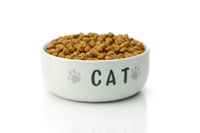
If you walk into any store that stocks cat food, the first thing you will note is that there is an overwhelming variety. Cat food comes in all shapes, sizes, colors, kibble shapes, and flavors. Cute kitties stare at you from the glossy pictures on the bags and cans, begging you to pick their product up and take it home. Commercials regularly tell us that all cats prefer their brand, and that this is the cat food for your household. But how will you make sense of all of this?
Learning what the label on the bag means helps you understand what is in the food and allows you to compare brands.
Here are some short topics that will help you separate fact from fiction.

List of Ingredients in Cat Foods
Cats are carnivores, and the best quality of cat food has meat as the primary ingredient. It is essential that a recognizable meat source (e.g., beef, liver, salmon) be in the top three listed items. The contents are ordered by proportional weight, with the item at the top of the list present in the largest quantity by weight. Note that the “byproducts” you see in the list consist of processing leftovers and are not primarily meat.
Evaluating Feeding Trials
Many brands of cat food indicate on the label that the product has passed the standard Association of American Feed Control Officials (AAFCO) feeding trials, which means that cats that were fed the formulation exclusively for several weeks were healthy at the end. While the AAFCO tests can show that a food is at least minimally nutritious, they may not detect more subtle nutritional deficiencies or imbalances that could cause chronic health problems over a longer period of time. Moreover, some companies, such as Wysong, manufacture cat food that is widely regarded as healthy but choose not to participate in the AAFCO trials.
Guaranteed Analysis on Cat Food Labels
The main categories of basic nutrients in a cat food are listed in the guaranteed analysis but are not necessarily ordered from most to least by percent. This analysis usually includes protein, fat, carbohydrate, and ash.
Ash refers to the mineral components of the diet and “low ash” food has been used to control struvite urinary tract stones. A low total ash and primarily low magnesium content is what this label refers to.
Nutritional contents are qualified by not more than and not less than. This method of labeling provides for variation between batches. It tells the consumer the relative amount when compared to published nutrient requirements. The precise content of the food is not given.
Expiration Date on Cat Food Labels
Check the expiration date on bags of food. Buy only as much as you will use by the expiration date. For best results, store dry food in tightly sealed containers.
Miscellaneous Guidelines for Evaluating Cat Food Labels
Here are some things to keep in mind when choosing cat food.
- Before you go to the store, check with your veterinarian to ensure your purchase decisions are based on your cat’s lifestyle and any special needs, not just on the best price. The adage "you get what you pay for" applies to cat food.
- Avoid buying whatever is on sale, and expecting your cat to adjust to the new feed easily. There is a good reason for the term “finicky cat”. If cats reject a new diet, the disruption in their food intake can lead to serious complications like fatty liver disease, especially in obese cats.
- Feeding a mix of hard and soft food, with various primary protein sources (e.g., chicken, beef, fish), can provide your cat with a little variety, so it is not necessary to limit your purchase to just one type of food—if you think your cat will appreciate the mix (and assuming he/she is not allergic to any of the ingredients).
Learn what to do if your cat's food or treats are ever recalled here: "What Should You Do If Your Cat's Food Is Recalled?"


You May Also Like These Articles:
What Should You Do If Your Cat's Food Is Recalled?
Should Cats Get Tap or Filtered Water?
Giving Your Cat Clean and Fresh Water
Wet Food vs. Dry Food For Cats
Helpful Tips for Getting Your Cat to Eat More Canned Food
Foods Toxic to Cats - Slideshow
Why Do Some Cats Carry Food Out Of Their Bowls to Eat It?
Notice: Ask-a-Vet is an affiliated service for those who wish to speak with a veterinary professional about their pet's specific condition. Initially, a bot will ask questions to determine the general nature of your concern. Then, you will be transferred to a human. There is a charge for the service if you choose to connect to a veterinarian. Ask-a-Vet is not manned by the staff or owners of CatHealth.com, and the advice given should not delay or replace a visit to your veterinarian.
 Facebook
 Twitter